
Rent vs Buy Guide
Rent vs Buy House in Bangalore
The EMI, the upfront costs and the break-even growth, worked through on a ₹5.5 crore 4 BHK villa at NVT Under The Open Sky.
Rent vs Buy House in Bangalore: The Numbers for a ₹5.5 Crore Villa in Whitefield
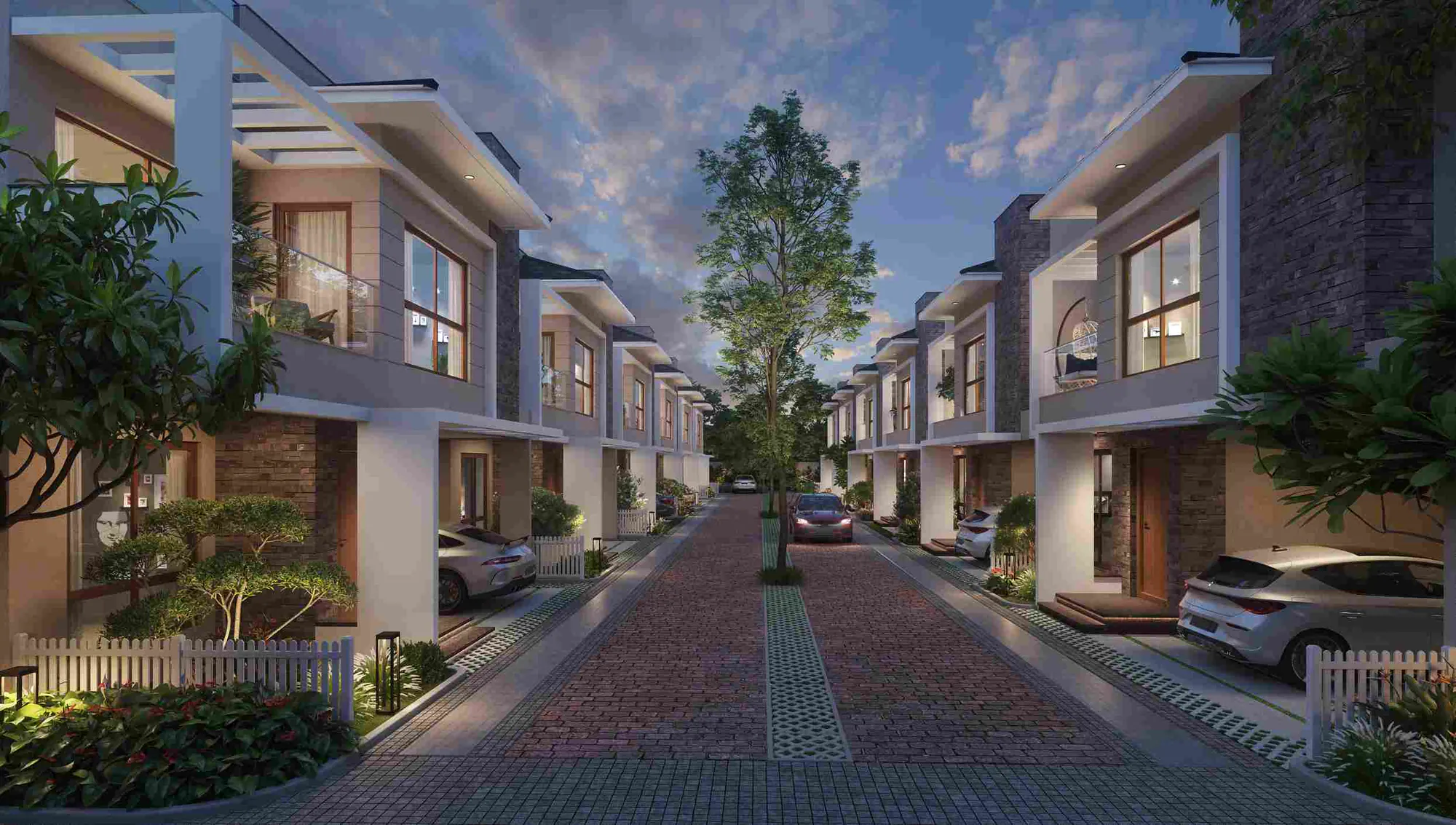
Most answers to the rent vs buy house question are a list of pros and cons. This page works through the numbers for one home: a 4 BHK villa at NVT Under The Open Sky, Budigere Cross, Whitefield, at the project's starting price of ₹5.5 crore*.
The villa is under construction, so there is no rental history inside the community to quote. Instead of guessing a market rent, we show three rent scenarios and let you see where your own rent fits. That leaves three things to weigh: the rent, the EMI and how fast the villa gains value.
The Short Answer
Each month, renting a comparable villa costs about a third of what you'd pay to own one with a loan. Buying comes out ahead only if the villa gains about 6% to 9% a year for as long as you stay, and the longer you stay, the lower that bar.
- EMI a month on a ₹4.125 crore loan at 8.5% over 20 years
- ₹3.58 lakh
- Your own money: 25% down payment plus stamp duty and registration
- ₹1.79 crore
- A year's rent as a share of the price, in the three rent scenarios used here
- 2%–3%
- Yearly price growth buying needs to break even
- 6%–9%
Villa Rent and Price: Three Scenarios
A common way to compare rent and price is the gross rental yield: a year's rent as a share of the price. For large villas this is usually low. The table shows what a month's rent would be on a ₹5.5 crore villa at three yields. If you rent a similar home today, find the row closest to your rent.
| Scenario | Rent a month on a ₹5.5 crore villa |
|---|---|
| Rent at 2% of price a year | About ₹92,000 |
| Rent at 2.5% of price a year | About ₹1.15 lakh |
| Rent at 3% of price a year | About ₹1.38 lakh |
Buying costs far more. Villa prices on our price page start at ₹5.5 crore*, with three types from 3,446 to 4,240 sq.ft. of built-up area. Villa-wise prices are shared on request.
Now compare the two. In the middle scenario, a ₹5.5 crore villa that rents for ₹1.15 lakh earns its owner 2.5% a year, so its price equals 40 years of rent. That is why, month to month, renting a large home almost always looks cheaper.
Rent vs EMI on a ₹5.5 Crore Villa
Take a villa at the starting price of ₹5.5 crore*.
Buying
- Price
- ₹5.5 crore (the starting price)
- Stamp duty, cess, surcharge and registration at about 7.6%
- About ₹41.8 lakh
- GST
- As applicable to under-construction property; see the cost sheet
- Down payment
- ₹1.375 crore, since banks lend at most 75% on loans above ₹75 lakh
- Your own money in total
- About ₹1.79 crore, before GST
- Loan
- ₹4.125 crore
- EMI at 8.5% for 20 years
- About ₹3.58 lakh a month
- Upkeep and charges a tenant wouldn’t pay
- Say ₹15,000 a month
Renting
- A comparable 4 BHK villa, middle scenario
- About ₹1.15 lakh a month, rising about 5% a year
Monthly outgo in year one
EMI of about ₹3.58 lakh plus about ₹15,000 of upkeep
That's a gap of about ₹2.58 lakh a month in year one. In that first year, interest alone comes to about ₹34.7 lakh, roughly two and a half times the year's rent of ₹13.8 lakh.
With a loan this size, the interest rate matters. In October 2026 the RBI raised the repo rate to 5.50%, and State Bank of India's home loan rates then ranged from 7.50% to 8.80%. This page uses 8.5% as a working rate. At 7.5% the EMI would be about ₹3.32 lakh; at 8% about ₹3.45 lakh.
Two smaller points on stamp duty. You pay it on the higher of the agreement price and the government's guidance value. And the Karnataka government said in November 2026 that it is examining a revision of guidance values, so check the current rates before you budget.

When Does Buying a Villa Break Even?
Owning costs more each month, so it wins only if the villa gains value. Here's a fair test. Suppose the tenant invests the ₹1.79 crore and adds the monthly difference between owning and renting. The table shows how fast the villa must gain value, each year, for the owner to end up level with that tenant.
| How long you stay | Tenant earns 7% | Tenant earns 9% | Tenant earns 11% |
|---|---|---|---|
| 10 years | 6.6% a year | 7.7% a year | 8.9% a year |
| 15 years | 6.2% a year | 7.5% a year | 9.0% a year |
| 20 years | 5.9% a year | 7.5% a year | 9.1% a year |
Illustration only. It uses the figures above, the middle rent scenario, rent rising 5% a year and a tenant who invests every rupee of the difference. GST, selling costs and capital gains tax are left out; including them raises the bar for buying.
If the tenant's money would earn 9%, the villa has to gain about 7.5% a year for buying to match renting. If it would earn 7%, the bar falls to between 5.9% and 6.6%. A higher rent lowers the bar as well: at the 3% scenario it drops by about half a percentage point.
What will prices here do? Nobody can promise. Published 2026 research gives some context: Anarock reported average home prices in Bengaluru up 8% year on year in the third quarter of 2026, and Knight Frank reported 11%. Past growth across a city is not a forecast for one villa.
The table also assumes the tenant invests the difference every month. With an EMI the saving happens automatically, while a tenant has to choose to save.
What Changes With a Villa Under Construction
A villa that is still being built changes the usual numbers in four ways.
GST applies. A home bought while it is being built attracts GST, which a completed home with an occupancy certificate does not. Ask for the exact amount on the cost sheet.
Rent and loan interest can overlap. Until you move in you keep paying rent where you live now, while interest on the disbursed part of the loan has already begun.
Payments are staged. A construction-linked plan spreads the price over the build, so the full EMI starts later than it would on a ready home.
The timeline is on record. The project is registered with Karnataka RERA, which lists 31 March 2029 as the completion date. Plan your rent and your loan around that date, with a margin.
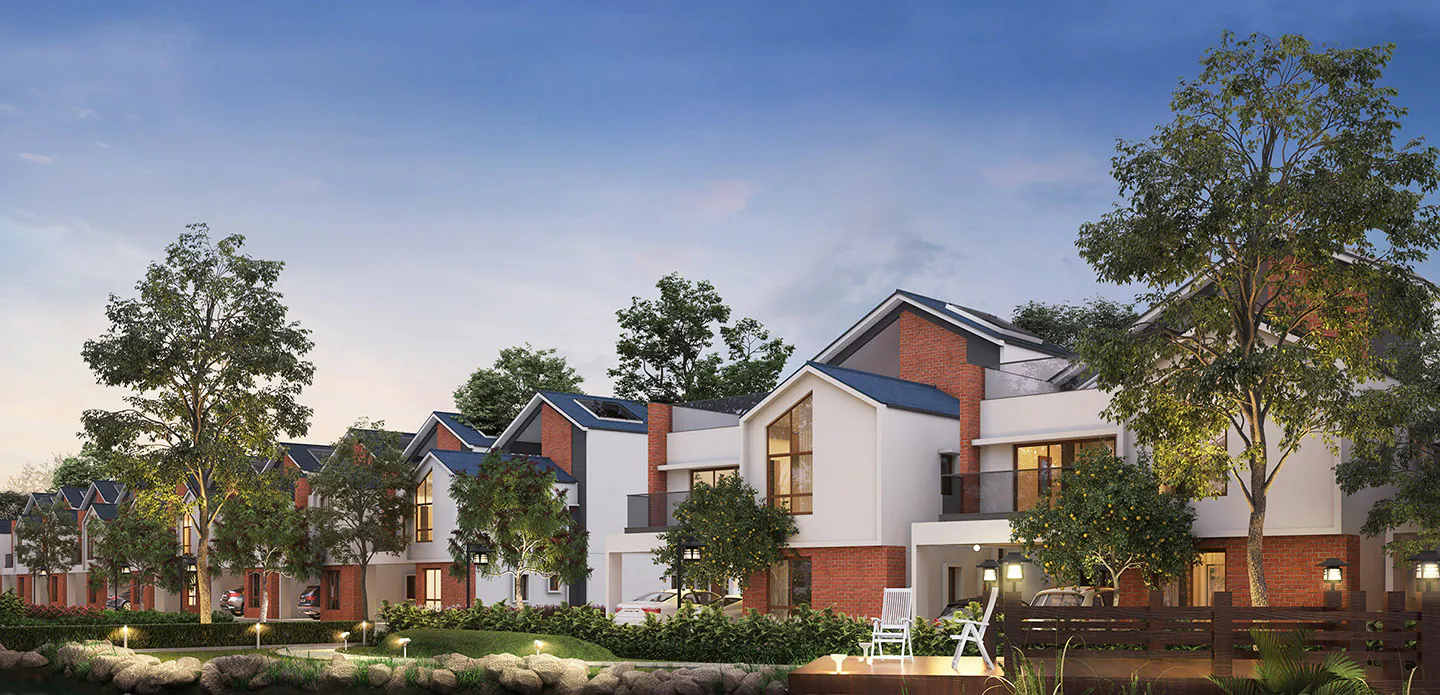
If you might sell within a few years, remember that buying and selling costs are large relative to a few years of price growth. A villa suits a long holding period.
You can judge the finished product before committing: model villas are open for visits and the developer offers a 3D virtual tour.
Not sure a villa suits you? Our villa vs apartment guide compares the two ways of living in Whitefield.
Tax and Paperwork for Tenants and Owners
- •Owners, old regime: you can deduct up to ₹2 lakh a year of home loan interest on a self-occupied home, plus principal within the ₹1.5 lakh limit. Interest paid before possession is claimed in instalments after you move in.
- •Owners, new regime: neither deduction is allowed on a home you live in.
- •Tenants, old regime: you can claim HRA relief, within limits linked to your salary and the rent you pay.
- •Tenants, new regime: there’s no HRA relief.
- •TDS on rent: if you’re an individual paying more than ₹50,000 a month, you must deduct 2% TDS from the rent. Villa rents in this bracket are above that line. On ₹1.15 lakh a month, that’s ₹2,300 a month.
- •TDS on purchase: a buyer deducts 1% TDS on a property priced at ₹50 lakh or more and deposits it against the seller’s PAN.
Tax rarely settles the question, and the rules change. Check your own case with a tax adviser.
Is It Better to Rent or Buy a House Here?
Renting usually suits you if:
- •you may change city or job within five to seven years
- •you want to try villa life, with stairs and a garden to keep, before putting ₹5.5 crore into it
- •the EMI would take more than 40% to 45% of your take-home pay
- •you’ll invest what you don’t spend on the villa, every month
Buying usually suits you if:
- •you plan to stay ten years or more
- •your household takes home about ₹9 lakh a month or more, which keeps a ₹3.58 lakh EMI near 40%
- •you have ₹1.79 crore, plus GST, without touching your emergency fund
- •you want land of your own and a home you can shape as you like
- •you expect East Bengaluru to keep gaining value, and can live with it if it doesn’t
NVT Under The Open Sky
NVT Under The Open Sky is a community of 74 luxury 4 BHK villas on about 6.5 acres at Budigere Cross, Whitefield, by NVT Quality Lifestyle. It is registered with Karnataka RERA under number PRM/KA/RERA/1251/446/PR/200924/007053.
- •Villas: three types, Aurora, Breeze and Celeste, with 3,446 to 4,240 sq.ft. of built-up area on 32 ft wide plots; details on the villas & configurations and price pages.
- •More: amenities, location & connectivity and floor plans.

Conclusion
For the rent vs buy house in Bangalore question, a ₹5.5 crore villa makes the gap easy to see. Month to month, renting wins by a wide margin. Over the long run, buying wins only if you stay a decade or more and the villa gains value at roughly 6% to 9% a year. If you want land of your own and plan to stay, the numbers can work; if you may move, renting is the safer call.
For current villa prices, availability or a site visit, contact us or call +91 73042 16059.
This page is general information, not financial, tax or legal advice. Figures are illustrations based on the stated assumptions and on published data as of November 2026, and will change with prices, interest rates and tax rules. *Starting price, indicative and subject to change.
Keep Reading
Comparing sizes as well as costs? Our guide to super built-up area vs carpet area explains how villa and flat sizes are quoted. For the bedroom question, see 3 BHK vs 4 BHK, or start with the Buyer's Guide 2026.
Frequently Asked Questions
Is it better to rent or buy a house in Bangalore?
It depends on how long you'll stay and how fast prices rise. For a ₹5.5 crore villa, renting costs far less each month. Buying comes out ahead only if the villa gains roughly 6% to 9% a year over a stay of ten years or more, on the assumptions shown on this page.
What is the EMI on a ₹5.5 crore villa?
About ₹3.58 lakh a month on a ₹4.125 crore loan at 8.5% over 20 years. Banks lend at most 75% on loans above ₹75 lakh, so you'd also need ₹1.375 crore as a down payment and about ₹41.8 lakh for stamp duty and registration.
How much is stamp duty and registration in Karnataka?
As of November 2026, buyers of homes above ₹45 lakh pay about 7.6% in total: 5% stamp duty, cess and surcharge on the duty, and a 2% registration fee. On ₹5.5 crore that is about ₹41.8 lakh.
Is there GST on an under-construction villa?
Yes. GST applies to a home bought while it is under construction, and not to a completed home that has its occupancy certificate. The amount for a specific villa is shown on the developer's cost sheet.
What income do I need to buy a ₹5.5 crore villa?
Keeping the EMI at 40% of take-home pay, your household would need about ₹9 lakh a month, plus about ₹1.79 crore of your own money before GST.
How long should I stay before buying makes sense?
Ten years or more is safer. Stamp duty and registration alone cost about ₹41.8 lakh on a ₹5.5 crore villa, and it takes years of price growth to earn that back. A longer stay lowers the break-even growth rate.
Do I have to deduct TDS if I rent a villa?
Yes, if you're an individual paying more than ₹50,000 a month. You deduct 2% of the rent and deposit it with the government, and the landlord gets credit for it.
Do I get tax benefits on rent or on a home loan?
Only in the old tax regime. An owner can deduct up to ₹2 lakh of interest a year on a self-occupied home, and a tenant can claim HRA relief. In the new regime neither applies. Check your own case with a tax adviser.
Run the Numbers on a Real Villa
Tell us the villa type you are considering and we will share its current price with GST, stamp duty and registration, so you can compare it with your rent. Call or WhatsApp +91 73042 16059, or send us your requirement and we will call back.
NVT Under The Open Sky - Villas in Whitefield
Budigere Cross, off Old Madras Road
74 Luxury 4 BHK Villas from ₹5.5 Cr*